
Adams peak which is also renowned as Butterfly Mountain is a conical shaped summit which is located at the core of the Sri Lanka
is renowned for its Sri Pada. Sri Pada which means the Sacred Footprint has a worthy association with the pinnacle that measures the height of 2243 m and talking about its relation with the crest than the rock formation here depicts the glory of Buddha footprint.
Geography
The pristine peak is perfectly perched within the ambience of the Central Highlands of Ratnapura district of Sri Lanka. The amazing essence of the atmosphere which is complimented by the dense forest, hilly slopes and mountains actually relates the glory of natural phenomenon of the site.
Nomenclature

As per the Hindu mythology the footprints which are to be found at the rock formation is the keepsake of Lord Shiva and following the same course the formation is renowned as Shiva Padam where traveller from all across the world comes in to devote their time to understand the mythological synonyms of the same.
History
When it comes to its chronicles than the name of Sri Pada was first mentioned within the core of Deepawamsa which is believed to be pre-historic Pali chronicle. Beside that the same was mentioned within the legacy of 5th century Mahawamsa where it is mentioned that Lord Buddha visited the summit.
Another historic tale which is associated with the documents of Sri Pada is incident of Fa Hein, the famous Chinese pilgrim. It is believed that he stayed at Sri Lanka during 411–12 CE and had mentioned the bequest of Sri Pada.
Another historic tale which is associated with the documents of Sri Pada is incident of Fa Hein, the famous Chinese pilgrim. It is believed that he stayed at Sri Lanka during 411–12 CE and had mentioned the bequest of Sri Pada.
The Sacred Mountain
To understand the importance of the Sacred Mountain one has to walk the stairs which begin from the walks of Nallathanniya. Reserved as holy pilgrim the people here following distinguish religions like Buddhism, Islam, Christian and Hinduism walks here and pay homage because each of the tale has something to do with the footprints which are commonly renowned as Sri Pada of Sri Lanka.
Especially for Buddhist the footprints mark as a centre of reverie where devotees from the entire world treks the difficult route to reach the heights to witness the same. The journey to meet with the testimony of lord is not easy and requires strong endurance because travelling an uphill might take several hours to reach the summit.

The main theme of the journey is to be at top during the time of sunrise when the idiosyncratic shapes of the crest moulds into triangular shade after surrounding the plain which can be traced while moving downward during the call of sun rise.
Best Time to Visit
The climbing season here starts during the time of April when you will witness the large numbers of devotee coming around to see the same. Beside that it is best recommended to trek the heights during the call of night when constellation of stars guides your way to see the amazing and spiritual formation of footprints.
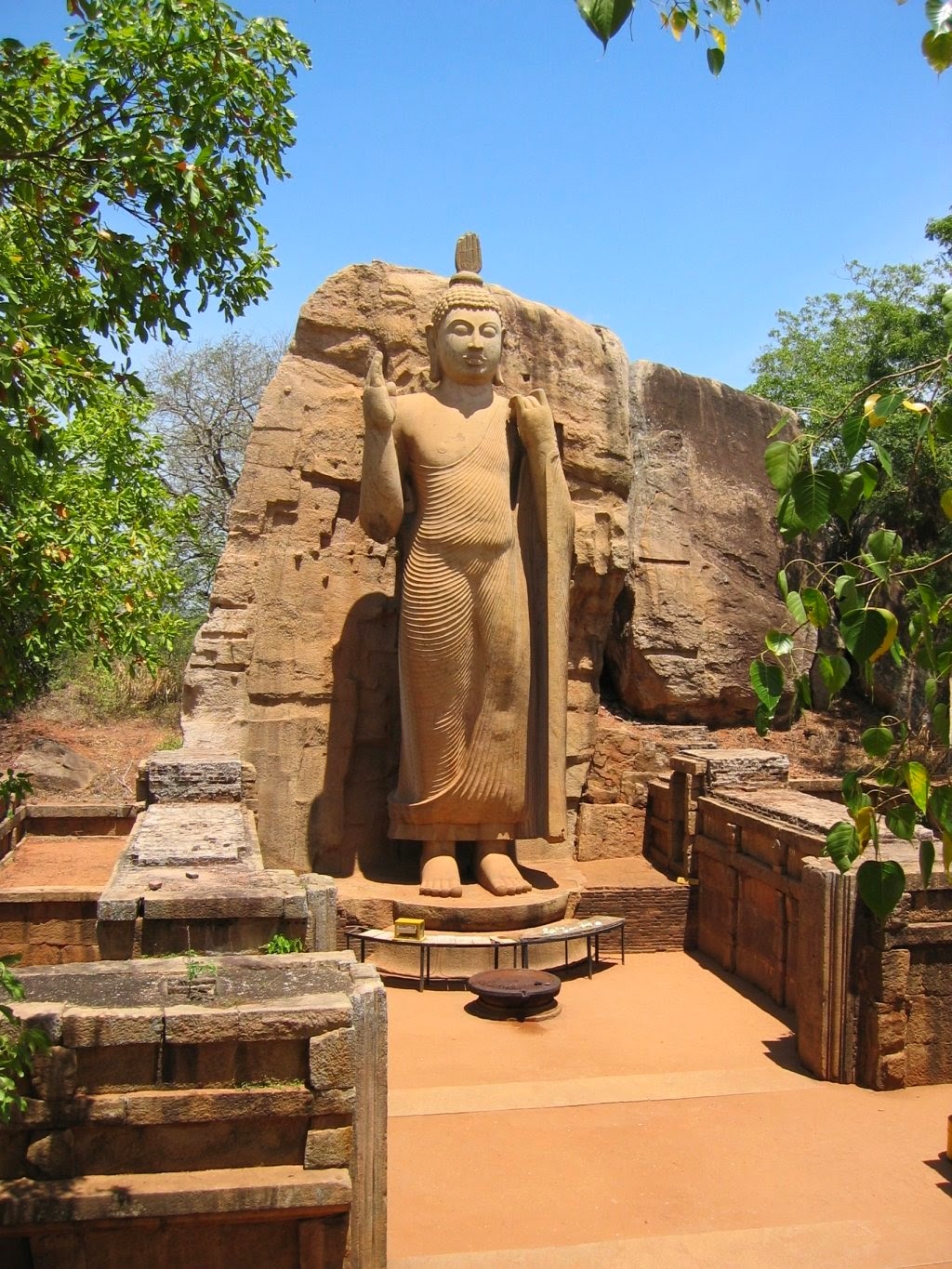
Since the assumption of history is always contradictory and today we are going to talk about the facts related with the pre historic shrine of the Buddha
. In this context first we have relate the words with the findings of the Robin Coningham,
archaeologist of the United Kingdom's Durham University, lead author of the discovery study, who released the fact by saying that they have discovered the earliest Buddha shrine in the world put forward by the journal Antiquity.. In this context first we have relate the words with the findings of the Robin Coningham,
After digging the walls which are visited by devote the international archaeology team reports regarding the facts of the shrine. Through the excavation what was learnt that the modern layout duplicated the older layout which was made out of wooden, says Coningham.
While doing the research the team used the two types of scientific tools to explore the age of the early shrine, Coningham further added.
People from outside really complimented the effort for bringing out such a fact but there could be a considerable amount of doubts regarding the facts related with the shrine of the Buddha.
As per the words of archaeologist Ruth Young of the United Kingdom's University of Leicester in an email message, archaeology is busy in claiming that they have discovered the oldest shrine of lord Buddha.
The Buddha's Birthplace
Since Buddhism is one of the world’s greatest and the oldest religion which has 350 million followers from all across the world.
As per the tradition Lumbini was the place where Buddha’s mother Maya Devi grasped the tree and gave birth to the Siddhartha Gautama, who after years of meditation became world renowned figure Lord Buddha.
When it comes to the birth date of the lord Buddha then even the dates is in dispute which according to Nepal authorities that he was born in 623 B.C and as per the other tradition he was born in 400 BC.
It was in 249 BC that Lumbini became one of the sacred sites of Buddhism which was successfully marked by historical inscription and while spreading the course of Buddhism the emperor Ashoka solemnly devoted his life for the same.
Lumbini garden was abandoned and was rediscovered in 1896 and was re-established as a worship centre, the Maya Devi temple, which is now renowned as World Heritage site of UNESCO.
Apprehensive regarding wear from traveller, UNESCO along with Japanese and Nepalese officials went hand on hand with Coningham and colleagues regarding the documentation and the brick structure which was laid during the time of Ashoka. The research was also supported by the National Geographic Society.
Coningham says that they had almost exclusive entrance to the site that possibly won’t come again for another generation, beside that they had made their way completely translucent to the pilgrims.
Ancient Tree Shrine
Coningham says that while digging down the central shrine the researchers discovered postholes to a wooden railing which was surrounded by a tree shrine and as per the folklore it dates back to its history back to 550 BC.
The team found that centre of the shrine was uncovered and it contained mineralised tree woods which were surrounded by clay floors.
The roots of the trees appeared to be fertilised and Bodhigara which are found in older Indian traditions, the effigy were in dearth of signs and sacrifices.
According to Coningham excavation at the site related its point of cultivation of around 1000 BC which is followed by the development of the Buddhist monastery which was discovered in the 6th century BC.
Scholarly Caution
As per the Young the documents related with Ashoka and the rituals practiced during the time is actually much older than it suppose to be.
Julia Shaw, a lecturer in South Asian archaeology at University College London, refers that wooden railing surrounding a possible tree shrine convincing but speculative.
Pilgrims meditate at the wall below the nativity scene within the Maya Devi Temple at Lumbini, Nepal. The remains of the earliest temples at the site are in the background.
Mediate pilgrims down the wall near the Maya Devi Temple at Lumbini and the remnants of the pre historic temple at the spot are still in the background.
She was cautious about the oldest Buddhist shrine claim.
As per the ancient Indian religions worshipping of tress at simple altars was like a sounding feature and was given the degree that it might overlap the Buddhist ritual and as you can see the present norms that we follow while worshipping the trees are quite disconnected as compared to the old rituals, Shaw says.
Coningham attributes by saying that the opportunity to understand the chronicles really contributed while conserving the importance of Lumbini, he further added it was quiet challenging but more of all it was exciting and inspiring to be a part of such historical episode.
Subscribe to:
Posts (Atom)


